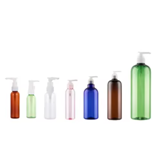
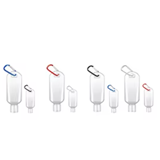
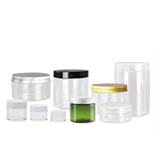
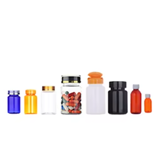
As a factory owner with over 15 years in PET bottle manufacturing, I've seen countless clients struggle to understand the complexities of bottle production. The technical jargon and multiple manufacturing stages often leave them confused about what really matters for their business.
PET bottle manufacturing involves three main stages: preparing raw materials, injection molding PET preforms, and stretch blow molding the final bottles. The process typically takes 15-25 seconds per bottle, depending on size and specifications.

Let me walk you through each stage of the process, sharing insights I've gained from running two production lines that serve clients across North America, Asia, and Australia. My goal is to help you understand not just the "how" but also the "why" behind each step.
What Raw Materials Are Used in PET Bottle Production?
Just last week, a client from Canada asked me about raw material selection. Like many others, he was concerned about quality and food safety. This is a critical starting point that affects everything downstream.
The primary raw material for PET bottles is virgin PET resin (polyethylene terephthalate), which comes in small pellet form. Additional materials include colorants, UV stabilizers, and acetaldehyde reducers, depending on the bottle's intended use.
Let's break down the raw material requirements in detail:
Material Specifications
| Component | Purpose | Typical Usage % |
|---|---|---|
| Virgin PET Resin | Main material | 96-98% |
| UV Stabilizers | Protection from sunlight | 0.5-1% |
| Colorants | Color adjustment | 0.5-2% |
| AA Reducers | Taste protection | 0.2-0.5% |
Quality Considerations
-
Intrinsic Viscosity (IV)
- Beverage bottles: 0.78-0.82 dL/g
- Hot-fill bottles: 0.82-0.85 dL/g
- Carbonated drinks: 0.80-0.85 dL/g
-
Moisture Content
- Must be below 50 ppm
- Affects clarity and strength
- Requires proper drying systems
How Does the Preform Manufacturing Process Work?
After 12 years of optimizing our injection molding department, I can tell you that preform production is where quality control becomes crucial. Many manufacturing issues can be traced back to this stage.
The preform manufacturing process involves melting PET resin at 280-300°C, injecting it into molds to create test-tube shaped preforms, and cooling them rapidly to maintain amorphous structure. This typically takes 8-12 seconds per cycle.
The injection molding process requires precise control of several parameters:
Critical Process Parameters
- Injection Pressure: 80-120 MPa
- Melt Temperature: 280-300°C
- Cooling Time: 3-5 seconds
- Cycle Time: 8-12 seconds
Key Considerations:
-
Temperature Control
- Even heat distribution
- Proper cooling system
- Temperature monitoring points
-
Quality Checks
- Weight consistency
- Wall thickness
- Crystallinity level
- Gate quality
From my experience managing thousands of production runs, I can say that maintaining consistent preform quality requires constant monitoring and adjustment of these parameters.
What Makes the Stretch Blow Molding Process Successful?
During a recent factory tour, a pharmaceutical company owner was amazed by the transformation from preform to bottle. This final stage is where the magic happens, but it's also where technical precision is paramount.
Stretch blow molding transforms preforms into final bottles through a two-stage process: heating the preform to 95-115°C and then stretching it with high-pressure air (35-40 bar) while confined in a bottle-shaped mold.
The success of this stage depends on several critical factors:
Temperature Profiling
- Heating Zone Parameters
- Stretching Rod Timing
- Cooling Requirements
Process Controls
-
Mechanical
- Stretching rod speed
- Mold movement timing
- Preform positioning
-
Air Systems
- Pre-blow pressure
- Final blow pressure
- Venting systems
Quality control at this stage includes:
- Wall thickness distribution
- Volume consistency
- Pressure resistance
- Visual defects inspection
When running our production lines, we maintain detailed records of these parameters for each batch, ensuring consistent quality for our international clients.
The PET bottle manufacturing process requires precision at every stage, from raw material selection through final quality control. Whether you're producing bottles for beverages, pharmaceuticals, or cosmetics, understanding these fundamentals helps ensure successful production runs and satisfied customers.
Need help with your PET bottle production? Contact me at polybottletech@gmail.com or visit www.polybottletech.com to discuss your specific requirements.